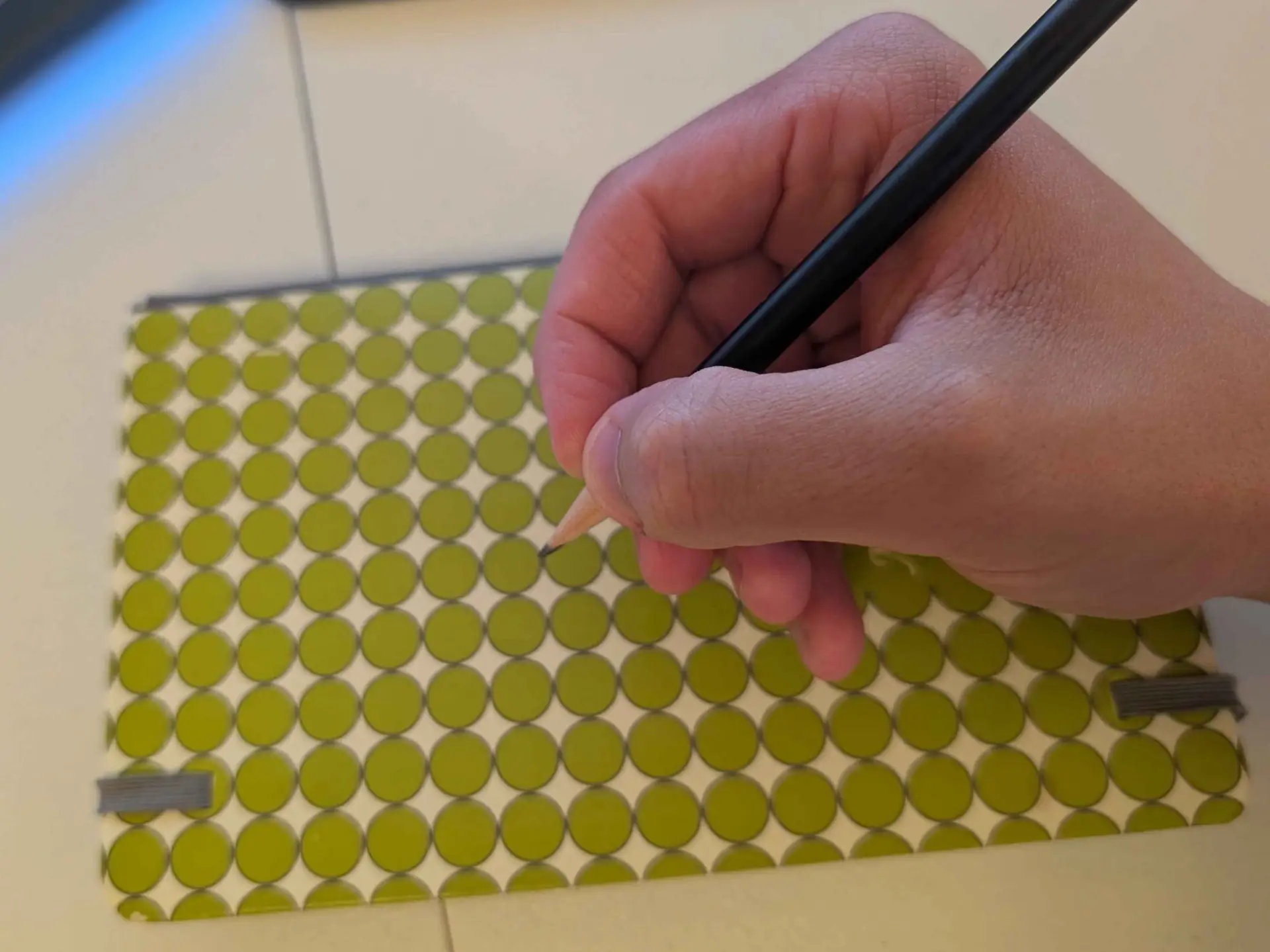
Recently, I’ve begun writing in a Leuchtturm1917 (review coming soon) in an attempt to fill it completely. It’s still early in the process, and I’ve already switched writing instruments once. My pen died so I moved on to a nearby pencil. After writing out several full pages with this pencil, I’ve discovered I’m not merely writing by hand. In fact, by writing with a standard wooden pencil, I’m doing something genuinely strange for an adult.
Here’s what happens when you start to write with a pencil a ton, and not all of them are subtle.
You Learn to Accept Bad Tech
Pencils are a little bad.
There’s that anecdote about Americans spending months trying to engineer a pen for space while the Russians just used a pencil. And, honestly, it makes me all the more proud to be an American, considering how bad pencils can be at times.
Oh, and before you “yeah, but” that story, don’t forget that the caveat to the story is that the pencil lead could break and the small bits could hurt someone or vital equipment. Pencils break and need to be shaved, just like your father in the mornings, on a regular basis at that. The things are messy.
And, even now in 2026, it seems that 99% of erasers should be called “smudgers” instead. If you write at all fast you’ll need to sharpen nigh on constantly (I do so every 5 to 10 minutes, it seems) too.
From front to back, wooden pencils are, for better or for worse, just not that great.
You Start to Treat Your Pencil Like the Tool It Is
So, you have a tool that you cannot effectively erase with. Or, if you do, you darken the page or even tear right through it.
What does the smart person do? The moment they realize their pencil has no effective eraser, everything changes. They stop treating the device they’re holding like a full-on pencil and start treating it like the device it really is:
A pen, but worse.
You Start to Accept Inconsistency
Though pens can get spotty at the end of their lives, pencils vary in line strength the whole way through.
At first sharpening you get a crisp and thin line that moves with a satisfying slice across the page. The lines and markings are dark with high contrast and unforgiving accuracy. Two minutes later? A thick and light line that’s hard to aim perfectly has slowly but surely emerged.
Sharpen again, and the whole cycle repeats.
The more I use a wooden pencil, the more I realize every single word looks like it was written by a slowly degrading, crumbling object.
Is that a Bit of Shame I See?
This constantly shifting will make you fixate on something you probably haven’t fixated on too heavily since your grade school years. Your handwriting. It’s called penmanship and not “pencilmanship” for a reason. There’s something about the whole process that just makes your i’s and t’s look childish and under-formed, at least if you haven’t practiced in years.
Want to start a journal that looks great instantly, no handwriting skills required? Start an Obsidian diary in less than 10 minutes.
You Learn that You’re Doing Something Fundamentally Different than Typing
For me, this one is the big kicker. This blends into a related topic, the differences between writing by hand and by keyboard, but writing with a pencil really honed it into my mind, so here goes:
Any extra writing project is a double-edged sword for me. I don’t keep exact tabs on my daily word writing count, but I know that if it gets too high I can feel constrained.
But writing with a stupid pencil, with my big adult stupid hand, feels fundamentally different from the clacking I do at the keyboard each day. It operates in a totally different space mentally and the activities are totally different. Even taking a break to sharpen the pencil feels so good, almost refreshing.
So, if you’re a fellow keyboard warrior and feel like you don’t have the time to tap out extra words for a side hobby or meditative journal, I strongly think you should reconsider. As much as the humble wooden pencil (deservedly) gets dunked on, it has its place.